Why Sealing Your Concrete Matters on the Gold Coast
Discover why sealing your concrete is essential in the Gold Coast's coastal climate. Learn about sealer types, application timing, and how often to reseal.

Daniel Mercer
The Case for Sealing Your Concrete
You know that crisp, clean look of a freshly poured concrete driveway? Our team loves that moment just as much as you do. Keeping it that way in a coastal environment requires a specific strategy.
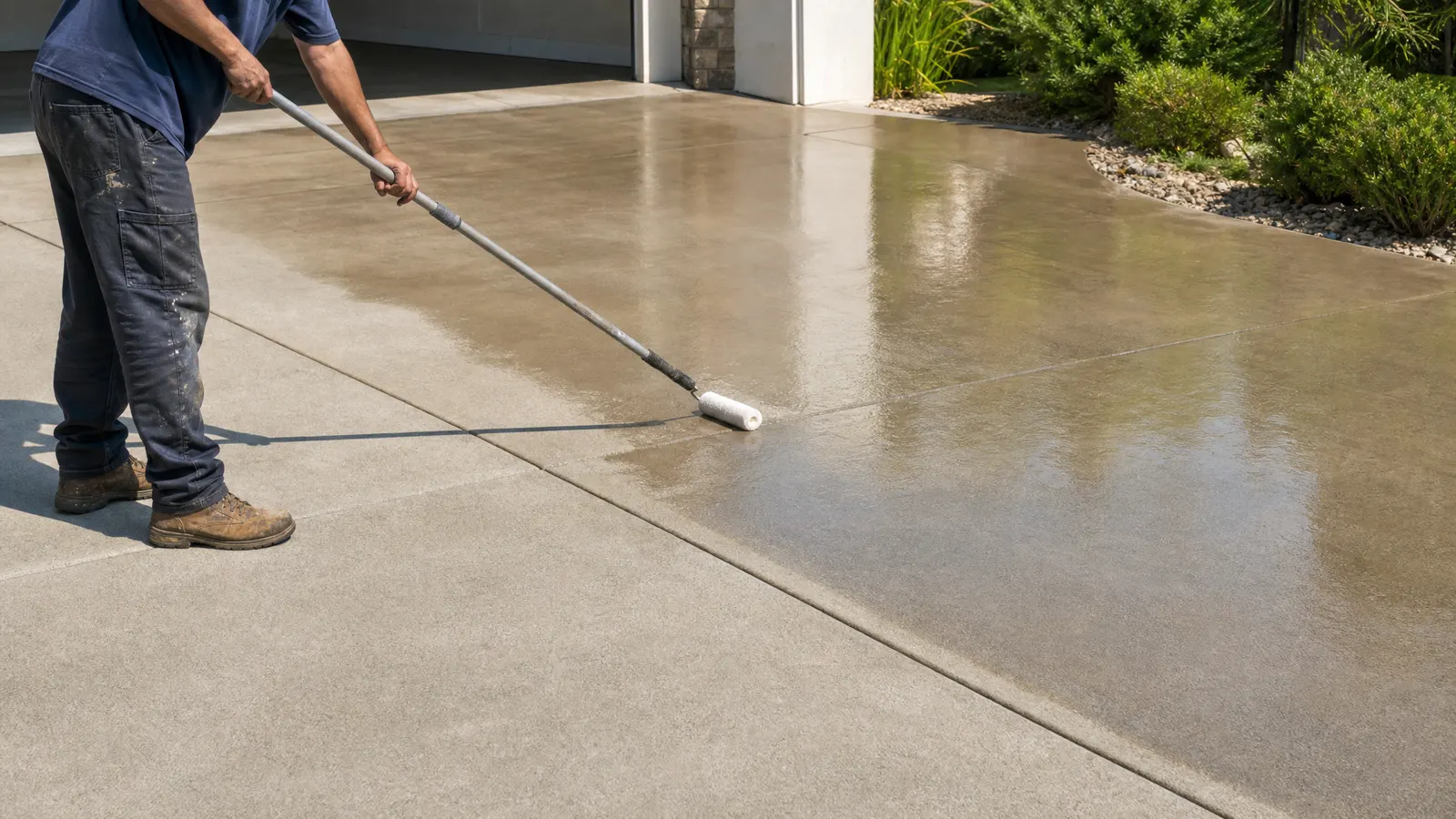
We tell every Gold Coast homeowner the same thing after a job. Seal your concrete and keep it sealed. This single step is the most effective way to protect your investment.
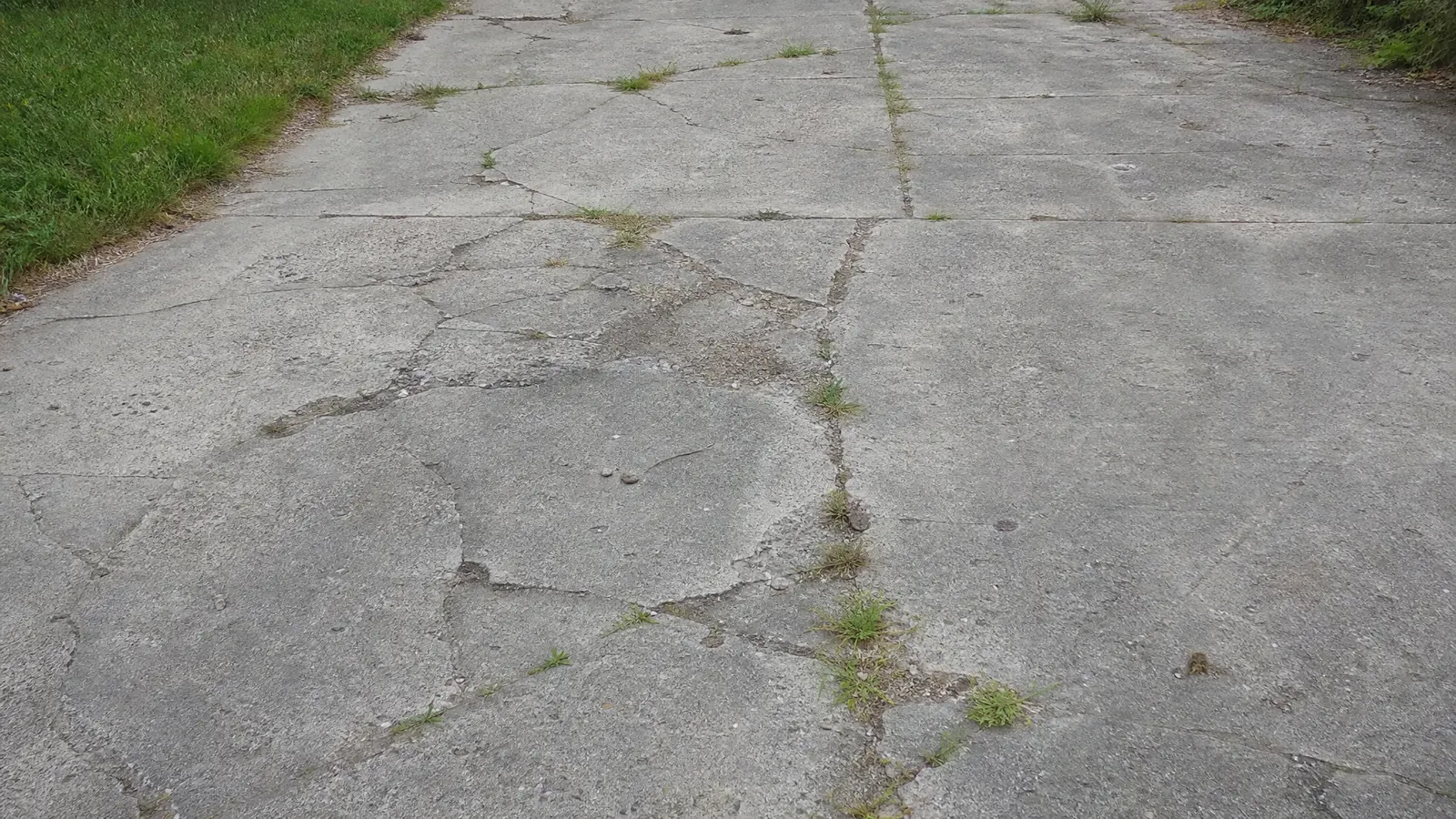
Neglect is the enemy of concrete longevity here. The local salt air and intense sun can degrade a slab faster than you might expect. Here is the practical breakdown of why sealing matters and how to get it right.
What Does Concrete Sealer Actually Do?
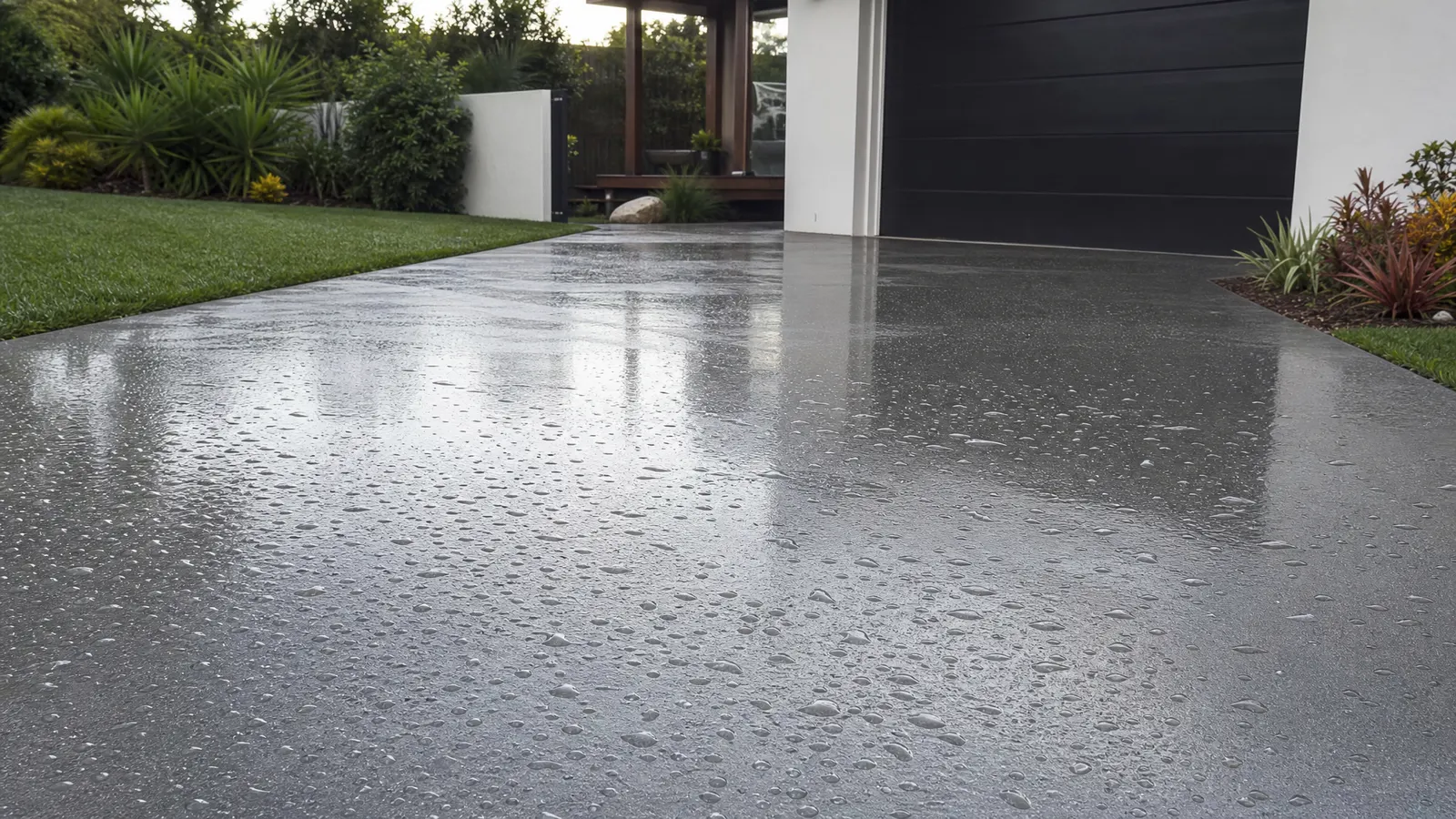
Concrete looks like a solid block of stone, but it acts more like a hard sponge. The material is full of microscopic capillaries that allow water, oil, and chlorides to seep deep into the slab.
A high-quality sealer creates a sacrificial layer or an internal barrier. It stops contaminants before they can do permanent damage.
Here is exactly how a professional-grade sealer functions:
- Repels Moisture: It stops water from soaking into the pores.
- Blocks Salt Attack: This is critical for preventing “concrete cancer” (spalling) in steel reinforcement.
- Filters UV Rays: High-solids sealers stop the sun from breaking down the surface paste.
- Stops Deep Staining: Oil and tire marks stay on the surface where they can be wiped off.
- Locks in Colour: It prevents the washed-out look common in aged oxide finishes.
- Controls Efflorescence: Sealing reduces the migration of salts that cause those ugly white powdery stains.
Why the Gold Coast Climate Demands Sealing
Our region throws a unique set of challenges at building materials. The combination of marine aerosols and subtropical weather creates an aggressive environment for raw concrete.
Intense UV Radiation
Queensland consistently records extreme UV index levels of 11+ during summer. This radiation attacks the chemical bonds in the top layer of unsealed concrete. The result is “dusting,” where the surface becomes chalky and erodes away. High-UV resistant sealers act like sunscreen for your driveway.
Salt Air Corrosion
The “Marine Zone” for corrosion is typically defined as anywhere within 1 kilometre of the surf, but salt spray travels much further. Airborne chlorides settle on your driveway daily. If they wash into the pores, they rust the steel mesh inside. Expanding rust cracks the concrete from within.
Heavy Rainfall Cycles
We see an average of 1200mm to 1400mm of rain annually, often in short, heavy bursts. Unsealed concrete absorbs this water like a reservoir. When the hot sun comes out immediately after a storm, that trapped moisture tries to escape as vapor. This pressure can pop the surface layer off in a process called scaling.
Humidity and Mould
Our humidity averages around 69-75%, which is a breeding ground for black mould and green algae. These organisms root deep into open concrete pores. A sealed surface keeps these spores on top, meaning a quick hose-down removes them instead of a heavy-duty pressure clean.
Types of Concrete Sealers
Choosing the wrong product is the most common mistake we see. You need to match the chemical composition to your specific aesthetic goals and traffic needs.
Penetrating Sealers (Silane/Siloxane)
These products absorb completely into the slab. They line the pores with water-repellent silicone molecules without changing the surface texture.
Best for: Steep driveways, pool surrounds, and natural stone where you need maximum grip. Why it works here: It allows the concrete to “breathe” and release ground moisture, which prevents the white hazing common in humid climates. Lifespan: 7 to 10 years.
Acrylic Sealers (Topical)
These sit on top of the concrete to form a protective skin. They come in water-based (low odour) or solvent-based (richer colour) varieties.
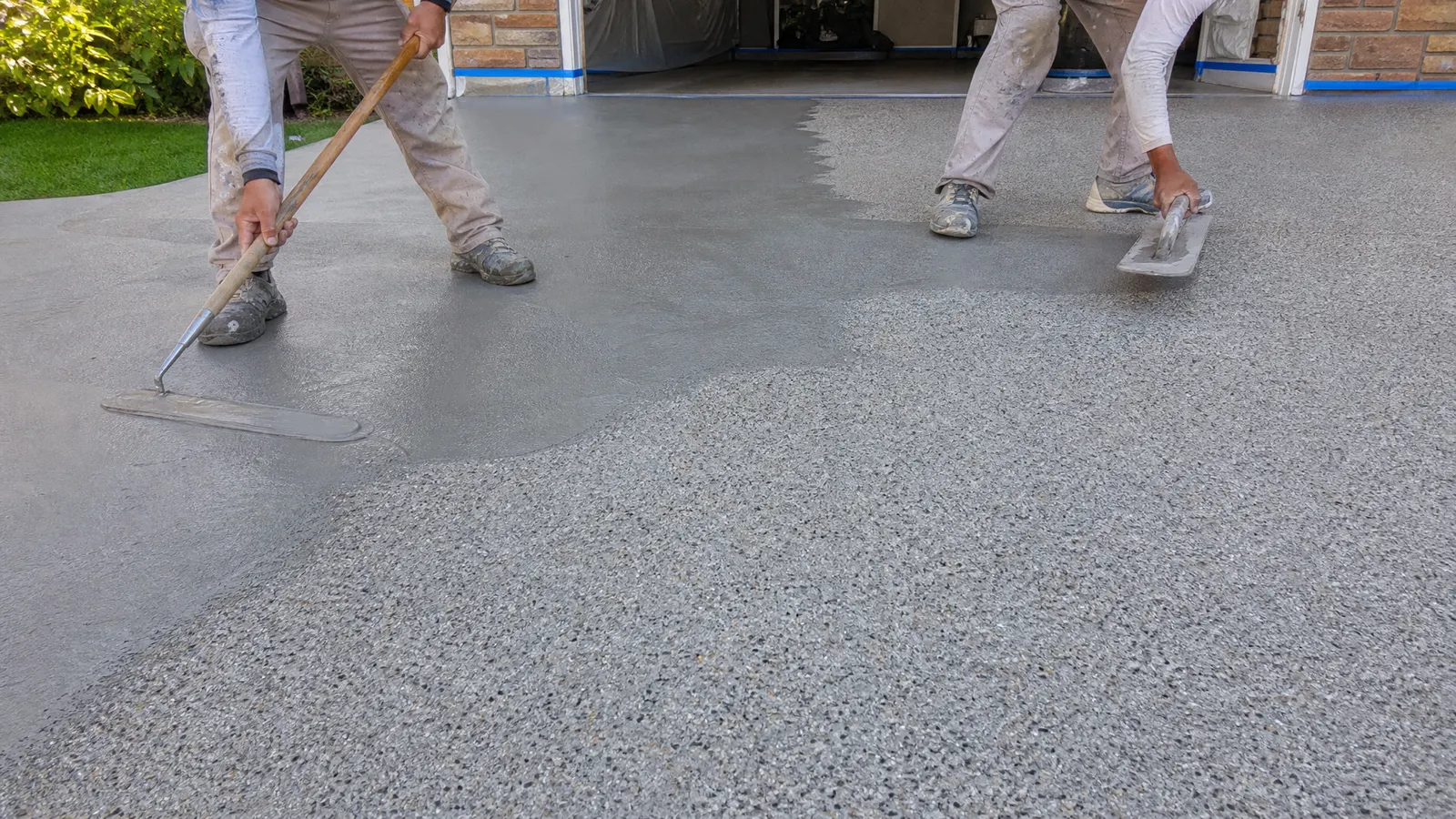
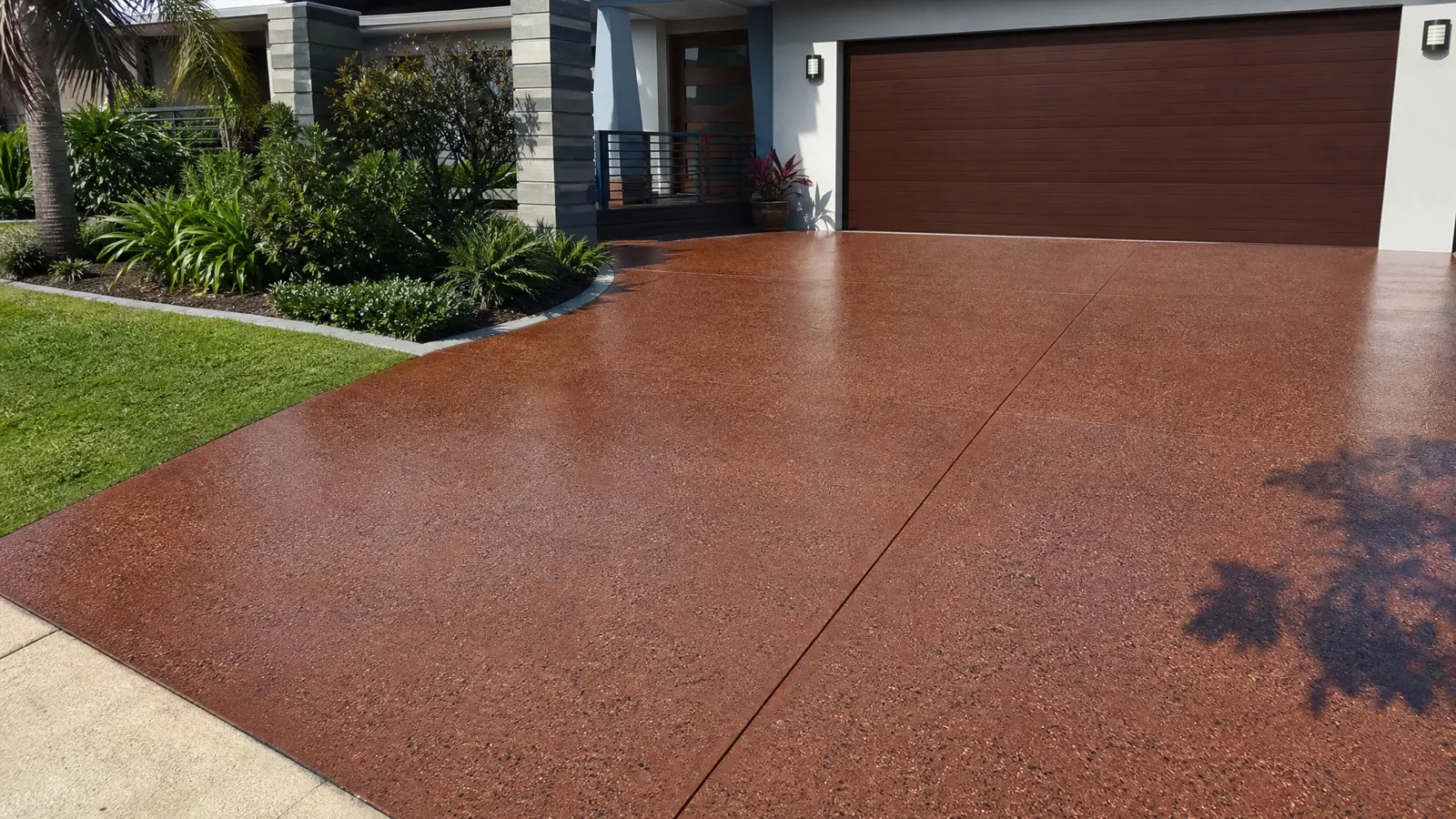
Best for: Exposed aggregate and stamped concrete. Why it works here: They provide that “wet look” that highlights the different coloured stones in your aggregate mix. Lifespan: 2 to 4 years (The Gold Coast sun breaks these down faster).
Polyurethane Sealers
These provide a much harder finish than acrylics. They are highly resistant to fuel, oil, and chemical spills.
Best for: Garage floors and internal living areas. Why it works here: They resist hot tyre pickup, where hot rubber strips softer sealers off the floor. Lifespan: 5 to 8 years.
Epoxy Coatings
Epoxy flooring is technically a coating rather than a sealer. It builds a thick, seamless coloured layer over the slab.
Best for: Showroom floors and “man caves.” Why it works here: It is impervious to almost everything, but it is generally not UV stable and will yellow if used outside. Lifespan: 10+ years (Internal use).
When to Apply Sealer
Timing is everything. Applying sealer at the wrong stage of the curing process can ruin the finish.
New Concrete: The 28-Day Rule
You must wait a full 28 days after pouring before applying most standard sealers. Concrete needs this time to reach its design strength and, more importantly, to lower its moisture content and pH level. Sealing too early traps excess water. This causes the sealer to turn white and peel off within months.
Existing Concrete: Ideally Winter
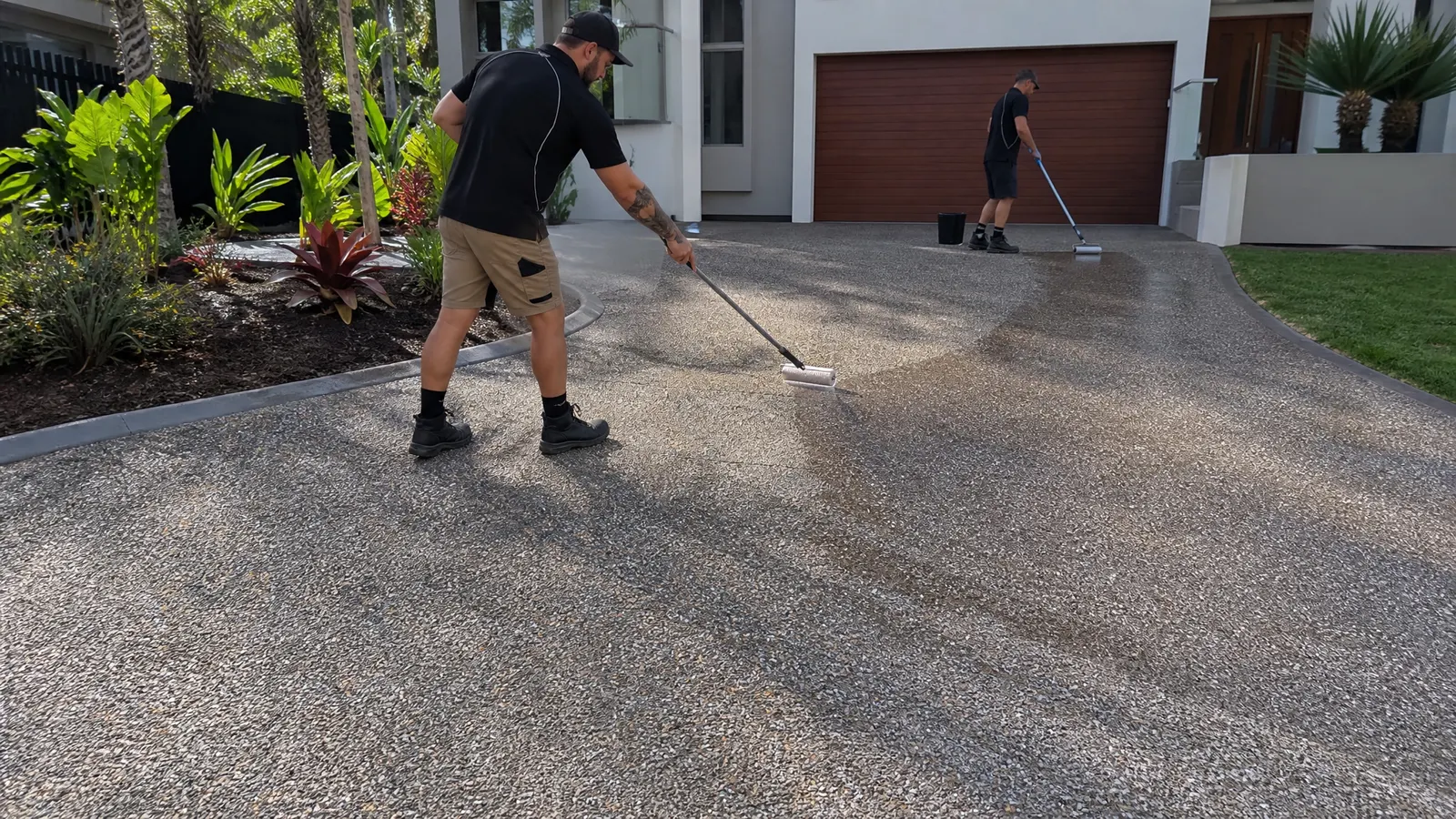
The sweet spot for resealing on the Gold Coast is May through September. We aim for days with low humidity and temperatures between 10°C and 25°C.
The “Dry Day” Requirement
Ideally, you need a window of 24 hours without rain before application and 12 hours after. Even a small amount of rain during the curing phase can cause surface defects like cratering or bubbling.
How Often Should You Reseal?
Visual inspection is better than a calendar schedule. Traffic levels vary wildly between a quiet cul-de-sac home and a busy commercial frontage.
| Sealer Type | Expected Life | Signs of Failure |
|---|---|---|
| Penetrating | 7-10 Years | Water soaks in and darkens the concrete immediately. |
| Acrylic | 2-4 Years | The surface looks dull, chalky, or patchy. |
| Polyurethane | 4-7 Years | Scratch marks appear white; the sheen becomes uneven. |
The Water Bead Test: Pour a cup of water on your driveway.
- Beads up: Your seal is active.
- Soaks in immediately: You have zero protection.
- Soaks in after a few minutes: Your seal is failing and needs a top-up.
The Cost of Sealing vs Not Sealing
We often hear that sealing feels like an unnecessary extra expense. The data tells a different story when you look at replacement costs.
Professional sealing on the Gold Coast typically costs between $8 and $18 per square metre for a standard clean and seal. For an average 60m² driveway, you are looking at an investment of $480 to $1,080.
Compare that to the rectification costs:
- Acid Washing & Stain Removal: $25-$40 per m².
- Concrete Resurfacing (Spraycrete): $45-$85 per m².
- Demolition and Replacement: $120-$200+ per m².
Spending a few hundred dollars every three years acts as an insurance policy for your $10,000 driveway.
DIY vs Professional Sealing
You can certainly buy sealer from a local hardware store. DIY can save money if you have the time and the right equipment.
The Professional Difference:
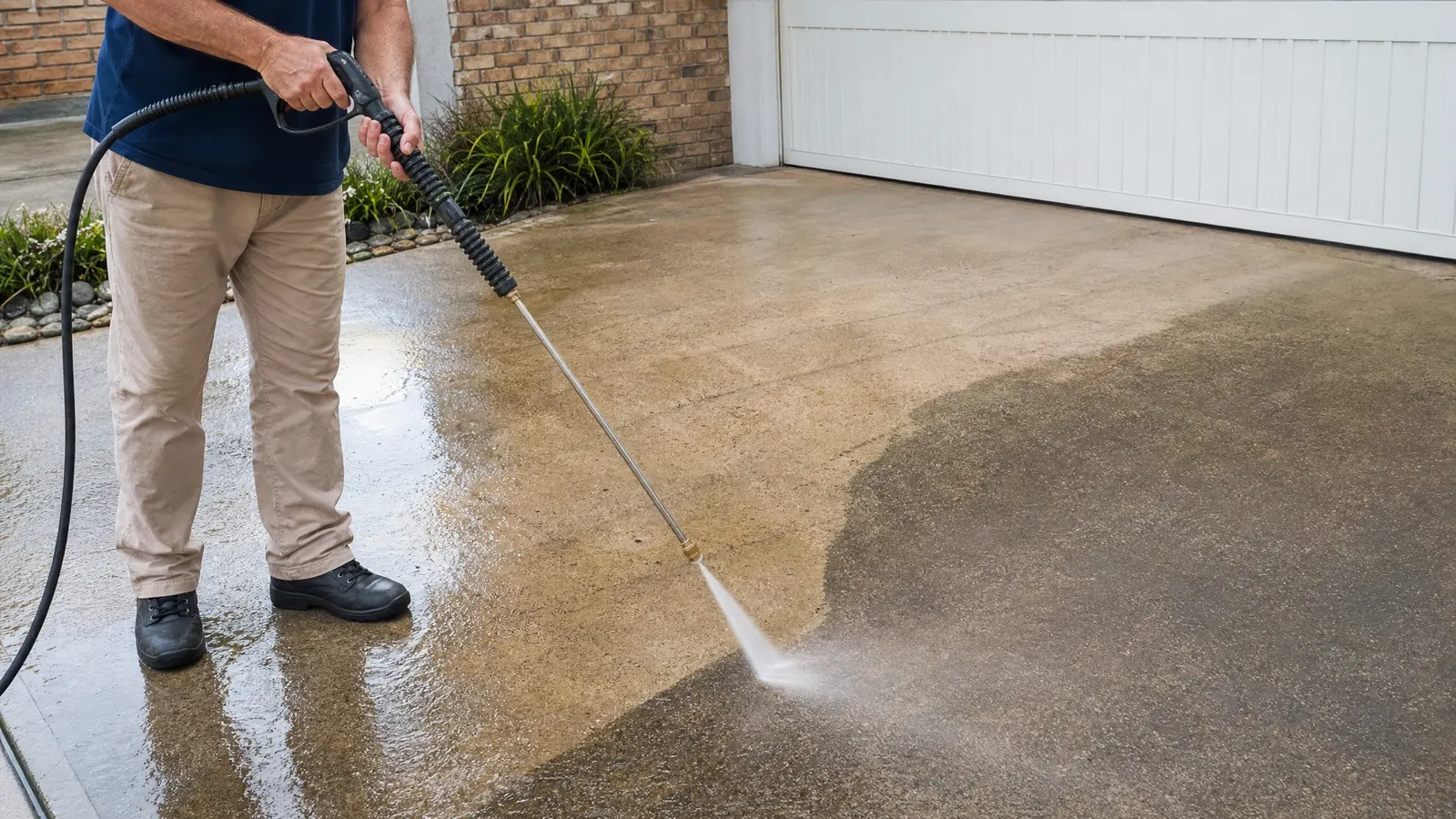
- Surface Prep: We use 3000+ PSI pressure cleaners and specific degreasers. A garden hose cannot remove the deep-seated grime that prevents sealer from bonding.
- Anti-Slip Additives: Pros mix in an industrial grit (like crushed glass or aluminium oxide) to meet Australian Standard AS 4586 for slip resistance. Store-bought sealers can turn your driveway into an ice rink when wet.
- The “Xylene Test”: We test your existing sealer before applying a new one. Putting a solvent-based sealer over a water-based one (or vice versa) without stripping it first will destroy the finish.
A Critical Warning for DIYers: Never apply sealer in the middle of a hot Gold Coast day. If the concrete surface temperature exceeds 30°C, the solvent evaporates too fast. This causes the sealer to “spiderweb” or bubble, leaving you with a sticky mess that costs significantly more to fix than to seal properly the first time.